Dry, cracked heels and rough calluses can need more than a basic body lotion. The best foot creams combine moisturizing ingredients with targeted exfoliants or soothing agents to improve texture and comfort.
We compared 10 popular options across strength, ingredients, texture, intended use, and value so you can choose a foot cream that fits your skin’s needs and daily routine.
Best 10 Foot Creams Picks for 2026
Deep Repair Pick

- Concentrated care for extremely dry, cracked feet
- Unscented, non-greasy, and hypoallergenic
- Compact 3.2-ounce jar for travel
Best For: Extremely dry, cracked feet and compact foot care
Botanical Daily Care
New York Biology Tea Tree Cream

- Tea tree oil helps refresh dry feet
- Includes aloe vera and hyaluronic acid
- Large 8-ounce jar for daily use
Best For: Routine hydration for dry, rough feet and heels
Maximum-Strength Exfoliation

- 40% urea for intensive exfoliation
- Targets cracked heels, calluses, and corns
- Suitable for feet and other rough areas
Best For: Extremely rough feet and thick, callused skin
Multi-Tube Value Pack
O'Keeffe's Healthy Feet 2-Pack

- Two portable 3-ounce tubes
- Concentrated care for cracked feet
- Unscented and non-greasy formula
Best For: Frequent users who want portable foot cream at home and on the go
Everyday Softening Pick
Gold Bond Softening Foot Cream

- Shea butter, jojoba, and vitamins condition dry skin
- Helps soften calluses, cracked heels, and rough feet
- Quick-absorbing, nongreasy cream with a fresh scent
Best For: Daily softening care for rough, dry feet
Relief-Focused Choice
MagniLife Pain Relieving Foot Cream

- Designed for soreness, burning, tingling, itching, and sensitivity
- Moisturizes severely dry, cracked, and sensitive skin
- Petroleum-, fragrance-, and dye-free formula with beeswax
Best For: Moisturizing care paired with soothing foot discomfort
Multi-Pack Moisture Favorite

- Four 4-ounce tubes for ongoing foot-care use
- Aloe, seven moisturizers, and three vitamins hydrate and nourish
- Dermatologist-tested and free of dyes, parabens, and phthalates
Best For: Regular moisturizing care for dry, rough heels
Best with Extra Features
Dr. Scholl's 25% Urea Foot Cream
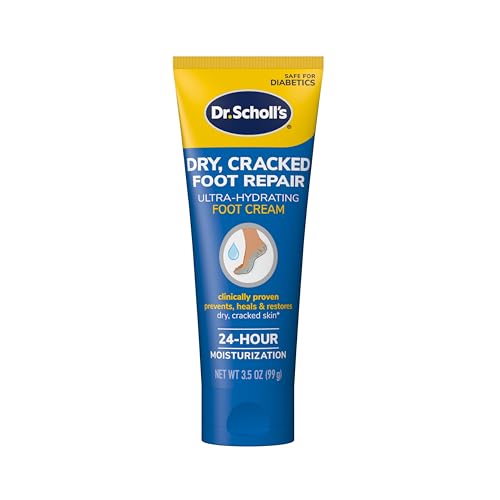
- 25% urea targets dry, cracked feet
- Up to 24 hours of hydration
- Epsom salt and essential oils soothe skin
Best For: Intensive care for severely dry, cracked feet
Luxury Daily Care
L'OCCITANE Shea Butter Foot Cream

- 15% organic shea butter nourishes skin
- Fast-absorbing and non-greasy
- 5.3-ounce size for regular use
Best For: Everyday moisturizing and softening
Best Simple Pick
40% Urea Foot Cream for Calluses

- 40% urea plus 2% salicylic acid
- Ceramides and hyaluronic acid add moisture
- Fast-absorbing, non-greasy texture
Best For: Calluses, corns, and extremely rough heels
Deep Repair Pick – O'Keeffe's Healthy Feet Jar
For extremely dry, cracked feet, O’Keeffe’s Healthy Feet is a concentrated option among foot creams. Its glycerin-based formula creates a protective layer to help lock in moisture, while the unscented, non-greasy texture suits straightforward daily care.
Best For: Extremely dry, cracked feet and shoppers who prefer a compact jar.
Pros:
- Designed to repair and relieve extremely dry, cracked feet.
- Helps boost and retain moisture for longer-term foot care.
- Hypoallergenic, unscented, and non-greasy.
- Compact 3.2-ounce jar is convenient for travel.
Cons:
- The concentrated formula may feel more intensive than a lightweight daily lotion.
- Single-jar format may be less convenient for keeping one at multiple locations.
Apply it at bedtime and after bathing, when moisturizing is especially useful for very dry skin. This is a practical choice when intensive moisture and a small, travel-friendly container matter most.
Botanical Daily Care – New York Biology Tea Tree Cream
New York Biology Tea Tree Oil Foot Cream - 8 oz | Moisturizing Care for Dry Feet & Rough Heels
Check Price On AmazonNew York Biology Tea Tree Oil Foot Cream is a daily moisturizing choice for dry, rough feet and heels. The formula combines tea tree oil with aloe vera and hyaluronic acid to hydrate, soften, and refresh the skin.
Best For: Daily care for dry, rough feet and shoppers seeking a tea tree-based formula.
Pros:
- Helps hydrate and soften dry, rough feet and heels.
- Contains tea tree oil, aloe vera, and hyaluronic acid.
- Free of alcohol, parabens, and sulfates.
- Large 8-ounce jar supports regular use.
Cons:
- Tea tree scent may not suit shoppers who prefer unscented foot creams.
- Its broad skincare positioning may be less targeted than a maximum-strength heel treatment.
The protective moisturizing layer helps reduce moisture loss and supports a smoother-looking appearance. Choose it for routine hydration when a refreshing, plant-based-featuring formula and generous size are priorities.
Maximum-Strength Exfoliation – PurOrganica Urea 40% Cream
PurOrganica Urea Cream uses a 40% urea concentration for intensive exfoliating and moisturizing care. Among foot creams, it is aimed at thick, rough skin, cracked heels, corns, and calluses rather than light everyday hydration.
Best For: Extremely rough feet, cracked heels, calluses, and corns needing intensive care.
Pros:
- Contains a maximum-strength 40% urea concentration.
- Targets dry, cracked heels, calluses, corns, and rough feet.
- Can also be used on areas such as hands, elbows, knees, and cuticles.
- Made in the USA and never tested on animals.
Cons:
- The high urea concentration may be excessive for mild dryness.
- Heat-sensitive formula may melt into a liquid before returning to a solid texture when cooled.
This is the most treatment-oriented option in the group, with exfoliating and softening benefits for thickened skin. It makes sense for shoppers who need more than basic moisture and want a multi-area cream.
Multi-Tube Value Pack – O'Keeffe's Healthy Feet 2-Pack
This two-pack of O’Keeffe’s Healthy Feet provides the same concentrated approach to extremely dry, cracked feet in convenient tubes. The unscented, non-greasy foot cream helps create a moisture-locking protective layer and is easy to use at bedtime or after bathing.
Best For: Households or frequent users who want two portable tubes of intensive foot care.
Pros:
- Formulated for extremely dry, cracked feet.
- Helps boost and retain moisture levels.
- Unscented, non-greasy, and hypoallergenic.
- Two 3-ounce tubes make it convenient to keep one at home and one on the go.
Cons:
- Two-pack may be unnecessary for shoppers trying foot creams for the first time.
- Concentrated care may feel heavier than a standard lotion.
The tube format is practical for controlled application and portability, while the two-pack supports consistent use in multiple places. Pick it over the jar version if easy storage and repeat use are more important than buying a single container.
Everyday Softening Pick – Gold Bond Softening Foot Cream
If you want straightforward daily care for rough, dry feet, this Gold Bond formula is one of the more practical foot creams to consider. Shea butter, jojoba, three vitamins, and a silk peptide matrix help soften callused areas and dry, cracked heels, while the nongreasy cream absorbs quickly.
Best For: Adults who want quick-absorbing moisture and softening care for rough, dry, or calloused feet.
Pros:
- Includes shea butter, jojoba, and three vitamins to condition dry skin.
- Designed to soften rough, calloused feet and cracked heels.
- Nongreasy texture with quick absorption and a fresh scent.
- Hypoallergenic formula in a convenient 4-ounce tube.
Cons:
- Its primary focus is softening and moisturizing rather than pain relief.
- Contains a fresh scent, which may not suit shoppers seeking unscented foot care.
This is a sensible everyday option when your main concerns are dryness, rough texture, and calluses. Choose it for routine softening rather than targeted relief from foot discomfort.
Relief-Focused Choice – MagniLife Pain Relieving Foot Cream
Among foot creams, MagniLife stands out for shoppers seeking both moisturizing care and comfort for sensitive feet and legs. The formula is designed to help calm soreness, burning, tingling, itching, and sensitivity while beeswax and eucalyptus moisturize severely dry, cracked skin.
Best For: Adults looking for a multipurpose cream for foot discomfort alongside dry, cracked, itchy, or sensitive skin.
Pros:
- Targets several discomfort concerns, including soreness, burning, tingling, itching, and sensitivity.
- Moisturizes severely dry skin and helps soften calluses, cracks, and fissures.
- Non-greasy, fast-absorbing formula with beeswax and eucalyptus.
- Made without petroleum, mineral oil, fragrance, or dyes; the notes state it can be used between toes and on legs and hands.
Cons:
- The eucalyptus scent may not appeal to everyone.
- Shoppers seeking only basic moisturizing may not need its pain-relief focus.
This is the most targeted choice of the three for shoppers balancing foot discomfort with significant dryness. Its broader use claims make it versatile, but its eucalyptus formula is better suited to those comfortable with scented topical care.
Multi-Pack Moisture Favorite – Gold Bond Healing Foot Cream
For shoppers who prefer a richer moisturizer or want multiple tubes on hand, this Gold Bond healing cream provides broad dry-foot care. Its formula combines aloe, seven moisturizers, and three nourishing vitamins to hydrate and soften rough heels, and this listing includes four 4-ounce tubes.
Best For: Individuals and households wanting a nourishing multi-pack for dry, rough feet and cracked heels.
Pros:
- Includes four 4-ounce tubes for ongoing foot-care use.
- Uses aloe to soothe and comfort dry, rough feet and heels.
- Contains seven moisturizers and three vitamins for hydration and nourishment.
- Dermatologist-tested and listed as dye-free, paraben-free, and phthalate-free.
Cons:
- A four-tube package may be more than a single user needs immediately.
- This is a moisturizing and softening cream rather than a pain-relief product.
This option makes the most sense when consistent moisturizing is the priority and you value the convenience of a multi-pack. Aloe and the richer nourishing profile suit dry, rough heels that need regular care.
Best with Extra Features – Dr. Scholl's 25% Urea Foot Cream
Among foot creams for severely dry, cracked feet, Dr. Scholl’s formula stands out for its 25% urea content. It combines intensive moisturization with Epsom salt and peppermint, lavender, and eucalyptus oils for a soothing, restorative treatment.
Best For: Adults seeking intensive hydration for dry, cracked feet and heels.
Pros:
- Contains a high 25% concentration of urea for deep softening and moisturization.
- Designed to provide hydration for up to 24 hours.
- Includes Epsom salt and calming essential oils for a soothing foot-care experience.
Cons:
- The concentrated formula may be more than needed for mildly dry feet.
- Its eucalyptus, lavender, and peppermint scent may not suit fragrance-sensitive users.
This is a practical choice when cracked, rough feet need more intensive care than a basic lotion can provide. The 3.5-ounce tube is sized for targeted foot treatment.
Luxury Daily Care – L'OCCITANE Shea Butter Foot Cream
For shoppers who want foot creams that feel comfortable in a daily routine, L’OCCITANE’s Shea Foot Cream offers a nourishing 15% organic shea butter formula. Its fast-absorbing, non-greasy texture is designed to soften and soothe dry feet without leaving a heavy finish.
Best For: Adults who prefer a moisturizing, non-greasy foot cream for everyday use.
Pros:
- Contains 15% organic shea butter to nourish and soften dry skin.
- Fast-absorbing, non-greasy texture suits daytime application.
- Large 5.3-ounce size supports regular foot-care use.
Cons:
- It may be less targeted than a high-urea cream for heavy calluses.
- The shea butter scent may not appeal to everyone.
This cream is a good fit for maintaining smooth, comfortable feet rather than focusing primarily on aggressive exfoliation. Apply generously and massage it over the entire foot.
Best Simple Pick – 40% Urea Foot Cream for Calluses
Among foot creams made for calluses and rough heels, this maximum-strength formula pairs 40% urea with 2% salicylic acid. Ceramides, hyaluronic acid, peptides, aloe, and allantoin add moisturizing and soothing support while the cream targets hard, dry skin.
Best For: Adults with calluses, corns, cracked heels, and extremely dry or rough skin.
Pros:
- Uses 40% urea and 2% salicylic acid for dual-action exfoliation.
- Includes ceramides, hyaluronic acid, and peptides to support the skin barrier.
- Fast-absorbing, non-greasy formula is designed not to stain socks or sheets.
- Can also be used on rough elbows, knees, and hands.
Cons:
- The maximum-strength exfoliating formula may be too intensive for mildly dry feet.
- Tea tree oil and menthol may not suit users who prefer an unscented cream.
- The product is intended for adult use.
This is the most targeted option here for thick calluses and stubborn roughness. Use it after a shower or before bed, following the product directions and adjusting frequency if skin feels uncomfortable.
How We Picked the Best Foot Creams
We evaluated these Foot Creams by looking at their active and supporting ingredients, intended purpose, consistency, packaging, size, and practical value. Moisturizers such as shea butter, aloe, and emollient oils can help soften dry skin, while urea is especially useful for rough, thickened areas. Some formulas also include exfoliating ingredients, tea tree oil, or ingredients marketed for soothing discomfort.
Because foot concerns vary, this list includes everyday moisturizing creams, high-strength callus treatments, non-greasy options, and products designed for sensations such as soreness or sensitivity. Product claims should be considered alongside your own skin type and any medical advice you have received.
Quick Comparison
| Best For | Look For | Featured Options |
|---|---|---|
| Everyday dryness | Rich moisturizers and softening ingredients | O’Keeffe’s, Gold Bond, L’OCCITANE |
| Cracked heels | Urea, occlusives, and intensive hydration | Dr. Scholl’s, O’Keeffe’s, Gold Bond |
| Thick calluses | Higher-strength urea and exfoliating ingredients | PurOrganica, Urea Cream 40 Percent |
| Foot comfort | Soothing or cooling-focused formulas | MagniLife, New York Biology |
Key Buying Factors for Foot Creams
Choose the Right Strength
For mild dryness, a daily moisturizing cream may be enough. Thick calluses and deeply rough heels often benefit from a stronger formula containing 25% or 40% urea. High-strength products can be more effective for hardened skin but may feel intense on sensitive or irritated areas.
Check the Ingredient Profile
Urea helps attract moisture and soften thick skin. Shea butter and other emollients help reduce moisture loss, while aloe can provide a soothing feel. Salicylic acid may support exfoliation, but it may not suit everyone. Tea tree oil and fragrance can also be irritating for sensitive skin, so review the label before applying.
Consider Texture and Routine
Rich creams are useful overnight, especially when paired with cotton socks, but can feel greasy during the day. Fast-absorbing or non-greasy formulas are more convenient if you need to put on socks or shoes immediately. A tube is generally portable, while a jar may offer better value for frequent use.
Use Safely
Apply foot cream to clean, dry skin and follow the product directions. Avoid applying exfoliating formulas to open cracks, bleeding skin, or areas that are inflamed unless a healthcare professional recommends it. People with diabetes, poor circulation, neuropathy, or persistent foot problems should ask a clinician before treating damaged skin themselves.
Who Should Buy Which Foot Creams?
- For routine maintenance: Choose a comfortable daily moisturizer with softening ingredients and a texture you will use consistently.
- For cracked heels: Look for an intensive cream with urea or rich occlusive moisturizers, then apply regularly rather than relying on occasional treatments.
- For stubborn calluses: Consider a higher-urea formula, potentially paired with an exfoliating ingredient, and follow usage instructions carefully.
- For daytime use: Select a fast-absorbing or non-greasy cream that will not interfere with socks and footwear.
- For sensitive skin: Favor simpler, fragrance-free formulas when available, and patch-test new products before broad application.
- For soreness or unusual sensations: A comfort-focused product may be worth considering, but ongoing pain, burning, tingling, or itching should be evaluated by a healthcare professional.