Cold, dry weather can leave heels rough, tight, and prone to cracking. The right foot cream can restore moisture while making daily maintenance easier.
We compared 10 popular options, from gentle everyday moisturizers to concentrated urea and exfoliating treatments, so you can choose a formula suited to your skin and routine.
Best 10 Foot Creams for Winter Picks for 2026
Extreme-Dryness Pick

- Concentrated cream for extremely dry, cracked feet
- Unscented, non-greasy, and hypoallergenic
- Travel-size 3.2-ounce jar
Best For: Severe winter dryness and cracked feet
Barrier-Repair Value
Eucerin Advanced Repair Foot Cream

- 10% urea, ceramide, and moisturizing factors
- Fragrance-free and suitable for daily use
- Three 3-ounce travel-size tubes
Best For: Daily hydration and moisture-barrier support
Softening Everyday Option
Gold Bond Softening Foot Cream

- Shea butter and jojoba soften rough feet
- Quick-absorbing, non-greasy formula
- Fresh scent in a 4-ounce tube
Best For: Routine softening of rough, calloused feet
Exfoliating Callus Treatment

- 15% lactic acid exfoliates rough skin
- Softens calluses, splits, and cracked heels
- Fragrance-free, no-scrub formula
Best For: Rough, callused feet needing exfoliation and hydration
Best Concentrated Cream

- Targets extremely dry, cracked feet
- Unscented and non-greasy
- Two travel-size tubes
Best For: Focused winter care for severely dry feet
Best Exfoliating Formula

- 40% urea plus 2% salicylic acid
- Softens rough and callused skin
- Also suitable for hands and elbows
Best For: Thick, rough, callused winter skin
Best Daily Moisturizer
New York Biology Tea Tree Cream

- Generous 8-ounce jar
- Tea tree oil, aloe, and hyaluronic acid
- Helps soften dry, rough heels
Best For: Everyday winter foot and heel hydration
Deep Repair Pick
Dr. Scholl's 25% Urea Foot Cream
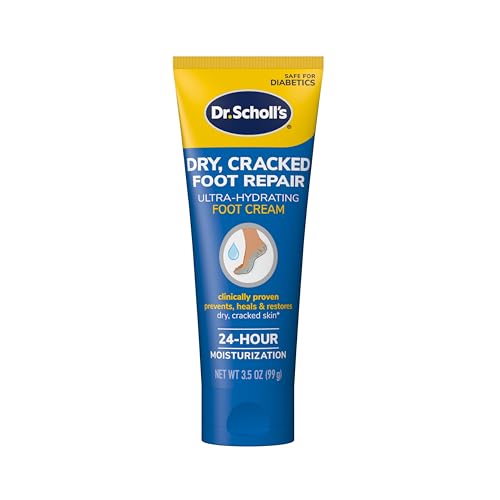
- 25% urea targets tough, cracked skin
- Up to 24 hours of hydration
- Eucalyptus, lavender, peppermint, and Epsom salt
Best For: Intensive care for very dry, cracked feet
Everyday Moisture Pick
Gold Bond Therapeutic Foot Cream

- Seven intensive moisturizers and three vitamins
- Jojoba and peppermint oil soothe dry skin
- Nongreasy 4-ounce cream
Best For: Routine care for dry, rough feet
Family-Size Soothing Pick
Gold Bond Healing Foot Cream With Aloe

- Four 4-ounce bottles included
- Aloe, seven moisturizers, and three vitamins
- Dye-, paraben-, and phthalate-free
Best For: Regular winter care for dry heels and households
Extreme-Dryness Pick – O'Keeffe's Healthy Feet
For shoppers comparing foot creams for winter, O’Keeffe’s Healthy Feet is a concentrated option designed for extremely dry, cracked feet. Its unscented, non-greasy formula creates a protective layer to help lock in moisture, and the 3.2-ounce jar is convenient for travel.
Best For: Adults with extremely dry, cracked feet who want an unscented, concentrated cream for bedtime or post-bath use.
Pros:
- Designed to heal, relieve, and repair extremely dry, cracked feet.
- Helps create a protective moisture-locking layer.
- Hypoallergenic, unscented, and non-greasy.
- Compact travel-size jar.
Cons:
- The concentrated formula is specifically aimed at severe dryness, so it may be more than needed for routine moisturizing.
- Comes as a jar rather than a tube.
Choose this cream if winter dryness has left your feet visibly cracked and you prefer a fragrance-free, concentrated treatment. Apply at bedtime and after bathing for the product’s recommended moisturizing routine.
Barrier-Repair Value – Eucerin Advanced Repair Foot Cream
Eucerin Advanced Repair Foot Cream is a practical choice among foot creams for winter when you want daily hydration and a multipack. Its formula combines 10% urea, ceramide, and natural moisturizing factors to hydrate very dry feet and support the skin’s moisture barrier.
Best For: Daily care for very dry feet, heels, and rough skin, especially for shoppers who want three travel-size tubes.
Pros:
- Contains 10% urea, ceramide, and natural moisturizing factors.
- Helps repair the moisture barrier and prevent recurring dryness.
- Fragrance-free, dye-free, and paraben-free.
- Multipack includes three 3-ounce tubes.
Cons:
- The three-tube pack may be more product than needed for occasional users.
- Designed for daily hydration rather than a dedicated exfoliating treatment.
With its fast-absorbing, non-greasy texture and barrier-focused ingredients, this multipack suits shoppers building a consistent winter foot-care routine. The small tubes also make it easy to keep cream in different bags or locations.
Softening Everyday Option – Gold Bond Softening Foot Cream
Gold Bond Softening Foot Cream is one of the more straightforward foot creams for winter, focusing on rough, calloused feet and cracked heels. Shea butter, jojoba, vitamins, and a silk peptide matrix provide conditioning and a protective layer of moisture in a quick-absorbing formula.
Best For: Shoppers seeking a softening cream for rough, calloused feet who prefer a fresh scent and tube packaging.
Pros:
- Formulated with shea butter and jojoba to soften dry feet.
- Includes three vitamins and a silk peptide matrix.
- Non-greasy and quick absorbing.
- Convenient 4-ounce tube.
Cons:
- Has a fresh scent, which may not suit shoppers seeking fragrance-free care.
- The notes emphasize softening and conditioning rather than intensive repair for severe cracking.
This is a sensible everyday option when winter leaves feet rough or calloused but you still want a lighter, easy-to-apply cream. Its fresh scent and quick-absorbing texture distinguish it from unscented treatment formulas.
Exfoliating Callus Treatment – AmLactin Foot Repair Cream
For winter feet that need more than basic moisture, AmLactin Foot Repair Cream pairs hydration with no-scrub exfoliation. Its clinically proven 15% lactic acid formula helps soften calluses, rough skin, splits, and cracks while supporting skin renewal.
Best For: Adults with rough, callused, dry feet who want an exfoliating treatment that does not require scrubbing or rinsing.
Pros:
- Contains 15% lactic acid AHA for exfoliation.
- Helps soften calluses and moisturize cracked heels.
- No-scrub, no-rinse application combines exfoliation and hydration.
- Fragrance-free, dye-free, paraben-free, and fast absorbing.
Cons:
- Its exfoliating formula may be more intensive than needed for simple dryness.
- The tube contains 3 ounces, less than some larger foot-cream packages.
Choose AmLactin when calluses and rough texture are central concerns in your winter foot-care routine. It is particularly convenient if you want to avoid using a separate scrub, since the cream exfoliates while it hydrates.
Best Concentrated Cream – O'Keeffe's Healthy Feet
For shoppers seeking foot creams for winter, O’Keeffe’s Healthy Feet is a straightforward option for extremely dry, cracked feet. Its concentrated, unscented, non-greasy formula is designed to boost and retain moisture, with a travel-friendly tube format.
Best For: Extremely dry, cracked feet and shoppers who prefer an unscented, non-greasy cream.
Pros:
- Creates a protective layer to help lock in moisture.
- Unscented, hypoallergenic, and described as safe for people with diabetes.
- Convenient two-pack of 3-ounce travel-size tubes.
- Recommended for use at bedtime and after bathing.
Cons:
- The concentrated formula is specifically positioned for very dry, cracked feet rather than general light moisturizing.
- Only available here as a two-pack of smaller tubes.
Choose this if you want focused winter foot care in a simple formula without fragrance or a greasy finish. Applying it consistently after bathing or before bed fits easily into a seasonal routine.
Best Exfoliating Formula – Ebanel Urea 40% Foot Cream
Among foot creams for winter, Ebanel stands out for combining intensive moisturization with exfoliating ingredients. Its 40% urea, 2% salicylic acid, and Epsom salt formula is intended for rough, callused, scaly, thick, and cracked skin on the feet and other dry areas.
Best For: Rough, callused heels and shoppers who want exfoliation alongside hydration.
Pros:
- Combines 40% urea with 2% salicylic acid to help soften and remove dead skin buildup.
- Includes glycerin, hyaluronic acid, shea butter, and botanical oils for moisture support.
- Can also be used on hands, knees, elbows, cuticles, and toenails.
- Dermatologist tested, cruelty-free, hypoallergenic, and noncomedogenic.
Cons:
- The active exfoliating formula may be more intensive than needed for mildly dry skin.
- The supplied notes recommend a patch test before first use.
- Comes in a jar, which may be less convenient for travel than a tube.
This is a strong choice for winter feet that feel thick, hardened, or callused, especially when plain moisturizer is not enough. Use it as directed twice daily and patch-test first.
Best Daily Moisturizer – New York Biology Tea Tree Cream
New York Biology Tea Tree Oil Foot Cream - 8 oz | Moisturizing Care for Dry Feet & Rough Heels
Check Price On AmazonNew York Biology Tea Tree Oil Foot Cream is a practical everyday pick among foot creams for winter. The 8-ounce cream uses tea tree oil, aloe vera, and hyaluronic acid to hydrate and soften dry, rough feet while helping create a moisture-locking protective layer.
Best For: Daily moisturizing for dry, rough feet and heels.
Pros:
- Large 8-ounce size suited to regular foot care.
- Contains tea tree oil, aloe vera, and hyaluronic acid.
- Designed to hydrate, soften, and smooth dry, rough skin.
- Free of alcohol, parabens, and sulfates; cruelty-free.
Cons:
- The tea tree scent may not appeal to shoppers seeking an unscented cream.
- The notes emphasize daily hydration and softening rather than intensive callus exfoliation.
- Packaged in a jar rather than a tube.
Pick this cream if you want a generous supply for routine winter maintenance and prefer a botanical tea tree profile. It is better suited to ongoing hydration than to treating especially thick calluses.
Deep Repair Pick – Dr. Scholl's 25% Urea Foot Cream
For especially dry, cracked feet in winter, Dr. Scholl’s foot cream stands out for its professional-strength 25% urea formula. It combines intensive moisturization with eucalyptus, lavender, peppermint, and Epsom salt for a soothing, aromatic foot-care routine.
Best For: Tough, dry, cracked feet needing intensive softening and hydration.
Pros:
- Contains 25% urea to help soften rough, cracked skin.
- Designed to provide up to 24 hours of hydration.
- Includes Epsom salt and calming essential oils for a soothing feel.
- Alcohol-free formula in a convenient 3.5-ounce tube.
Cons:
- The peppermint, lavender, and eucalyptus scent may not suit everyone.
- Its intensive formula may be more than needed for mild dryness.
Choose this option when winter dryness has progressed to rough, cracked skin and you want a concentrated cream rather than a lightweight everyday lotion.
Everyday Moisture Pick – Gold Bond Therapeutic Foot Cream
Gold Bond Therapeutic Foot Cream, With Jojoba & Peppermint Oil, Foot Moisturizer, 4 oz
Check Price On AmazonGold Bond Therapeutic Foot Cream is a practical choice among foot creams for winter when you want regular moisture for dry, rough feet. Its formula includes seven intensive moisturizers, three vitamins, jojoba, and peppermint oil in a nongreasy cream.
Best For: Everyday moisturizing of dry, rough feet and heels.
Pros:
- Combines seven moisturizers with three vitamins.
- Jojoba and peppermint oil help soothe and soften rough skin.
- Nongreasy texture is suitable for anytime use.
- Comes in a larger 4-ounce bottle.
Cons:
- Peppermint scent may be too noticeable for fragrance-sensitive users.
- The notes do not specify a high-strength ingredient such as urea for severe cracking.
This is a sensible daily-use pick for maintaining softer-feeling feet through winter, especially if you prefer a moisturizing cream that does not feel greasy.
Family-Size Soothing Pick – Gold Bond Healing Foot Cream With Aloe
Gold Bond Healing Foot Cream is a convenient option for winter foot care, particularly if you want a soothing formula for dry heels and a multi-bottle supply. It uses seven moisturizers, three vitamins, and aloe to nourish and comfort rough skin.
Best For: Households or frequent users treating dry, rough heels with a soothing aloe formula.
Pros:
- Includes four 4-ounce bottles for a substantial supply.
- Seven moisturizers and three vitamins help nourish and soften feet.
- Aloe helps soothe and comfort dry, rough heels.
- Dermatologist-tested and made without dyes, parabens, or phthalates.
Cons:
- Buying four bottles may be excessive for occasional users.
- The supplied notes do not identify a concentrated urea formula for severe cracks.
Consider this multipack if you apply foot cream regularly, share products at home, or want to keep a soothing aloe-based moisturizer available throughout the colder months.
How We Picked the Best Foot Creams for Winter
We focused on formulas designed for dry, rough, or cracked feet and considered the ingredients most relevant to winter skin. Urea helps attract and retain moisture while softening thick skin; lactic acid and salicylic acid can help loosen buildup; and occlusive, emollient ingredients help reduce moisture loss. We also considered product size, packaging, intended use, texture, and whether each option is better suited to daily maintenance or targeted repair.
Ingredient strength matters, but it is not the only factor. A highly concentrated cream may be useful for hardened heels yet feel too intense for sensitive skin. We therefore included a range of textures and strengths rather than treating one formula as best for everyone.
Quick Comparison
| Best For | Look For | Formula Type |
|---|---|---|
| Everyday winter dryness | Rich moisturizers and humectants | Daily cream or lotion |
| Thick, rough heels | Urea, lactic acid, or salicylic acid | Targeted repair treatment |
| Very dry, cracked feet | Higher urea concentration plus occlusives | Intensive cream |
| Routine maintenance | Non-greasy texture and convenient packaging | Tube or lightweight cream |
Key Buying Factors for Foot Creams for Winter
Active Ingredients
For mild dryness, a moisturizing formula may be enough. Urea is a versatile choice because it hydrates and can soften rough skin, with higher concentrations generally intended for more stubborn buildup. Lactic acid provides gentle exfoliation, while salicylic acid is better reserved for carefully targeted use on thick, rough areas.
Skin Sensitivity and Condition
Cracked skin can sting when exposed to exfoliating acids, fragrance, peppermint, or other botanical ingredients. If your feet are irritated or sensitive, start with a simpler, fragrance-free moisturizer and apply it to intact skin. Stop using a product if burning, swelling, or persistent irritation develops.
Texture and Application
Rich creams work well overnight, especially when covered with breathable cotton socks. A lighter, non-greasy tube may be easier to use during the day. Apply after bathing while skin is slightly damp, but avoid applying cream between the toes unless the label specifically recommends it.
Size and Value
Compare the price per ounce, particularly when choosing multipacks. Larger containers can be economical for daily use, while smaller tubes are more portable and help preserve freshness through frequent handling.
Who Should Buy Which Foot Creams for Winter?
Choose an everyday moisturizing cream if your main concern is seasonal dryness and you want a comfortable product for regular use. Consider a urea-based option for rough heels, callused areas, or dryness that does not improve with basic lotion. A higher-strength urea or acid formula is better suited to thick, stubborn buildup, but introduce it gradually and follow the label.
If your feet are deeply cracked, bleeding, painful, or showing signs of infection, a cosmetic foot cream may not be enough. Seek medical advice, especially if you have diabetes, reduced circulation, neuropathy, or another condition that affects healing. For most shoppers, consistent application—preferably after bathing and before bed—will matter as much as the specific product selected.